

Colorectal cancer screening
Cancer screening refers to the systematic searching for precancerous lesions or early-stage cancers within a population. The goal is to reduce deaths caused by the cancer being screened. Screening is free of charge for participants.
Colorectal cancer screening in brief
-
Screening reduces colorectal cancer deaths by detecting cancer at an earlier stage, leading to lighter treatments and a better prognosis.
-
The screening test is easy and painless to perform at home whenever it suits you best.
-
Colorectal cancer can be prevented by removing precancerous lesions during a colonoscopy.
-
Most positive results are due to reasons other than cancer, but waiting for further investigations and results can be stressful.
-
Screening is not perfect: it does not always detect all cancers, and a normal result does not guarantee that cancer cannot develop later.
Why screen for colorectal cancer?
In the beginning, colorectal cancer symptoms are often completely absent or vague. The most typical symptoms include various changes in bowel habits, such as abdominal pain, constipation, alternating diarrhea, difficulty passing stool, and blood in the stool. Mucus in the stool, scanty stools, bloating, and abdominal cramping may also occur. Sometimes, anemia, fatigue, or unexplained weight loss can be signs of colorectal cancer.
Because the symptoms associated with colorectal cancer are vague, develop gradually, and similar stomach issues may have occurred for years prior, people often do not recognize them as serious. Many may also find these symptoms embarrassing. Consequently, seeking medical attention is often delayed.
If you experience any of the symptoms described above and they do not go away, please contact a doctor. Do this even if you have just participated in screening or are scheduled to do so in the near future. In most cases, investigations reveal a cause other than cancer for the symptoms.
The purpose of colorectal cancer screening is to detect the disease at an early stage, when it is more likely to be curable. The ultimate goal of screening is to reduce deaths caused by colorectal cancer.
Screening saves lives
Screening helps detect cancer in its early stages.
The screening is simple and free
The screening test is done at home, and it is painless and free.
You don’t have to face this alone
If needed, you will be guided to further examinations and care.
When is it my turn to be screened?
The target group for colorectal cancer screening consists of individuals aged 56 to 74, as colorectal cancer is most common in this age range. A screening invitation is sent out every two years. It is important to repeat the screening regularly, as a single test only reflects the situation at that specific moment. The screening is part of municipal healthcare services.
However, to ensure that healthcare resources remain sufficient, the screening program cannot be launched for the entire target group all at once. In 2022, colorectal cancer screening was introduced nationwide for men and women aged 60 to 68. The program is expanding year by year to cover the entire target population by 2031. By that time, everyone aged 56 to 74 will be invited to participate.
The effectiveness of the screening program is monitored by the Finnish Cancer Registry, and adjustments will be made to the program if necessary.
You can check the image to see when you will be invited to participate based on your year of birth. The screening interval is 2 years. The age groups marked with a blue background indicate the year they will receive their invitation.
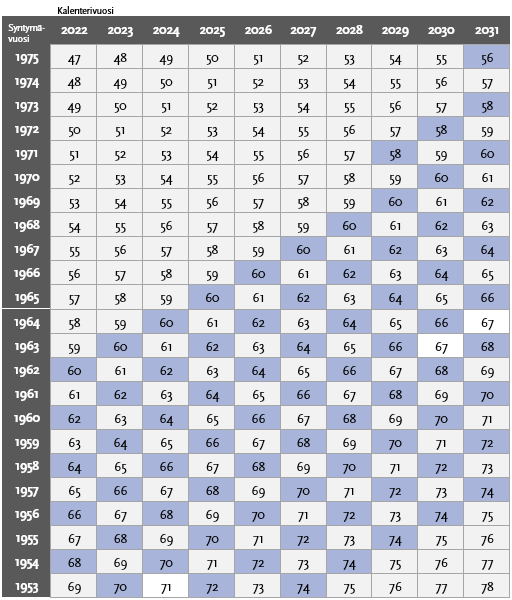
Colorectal Cancer Screening Expansion Matrix
How does colorectal cancer screening work?
In its early stages, an intestinal tumor may bleed slightly without the blood being visible to the naked eye. The screening test can detect this hidden, occult blood in the stool. This allows the disease to be found early and treated before the cancer advances. Participating in colorectal cancer screening is free of charge.
The test used in colorectal cancer screening is called the FIT (Fecal Immunochemical Test). It is an immunochemical test designed to find hidden blood in the stool. Those invited to the screening will receive an invitation, a sampling kit, and detailed instructions by mail. The screening sample is collected at home by brushing the test stick through your stool. The sample is then mailed to the screening center in the pre-paid cardboard envelope provided in the kit. The screening center analyzes the sample in a laboratory.
Understanding Your Results
The screening test results will be mailed to you within approximately one month after returning the sample. The result can be either negative or positive. A negative, or normal, result means that no blood was detected in the sample. A positive result means that blood was found.
Negative Result
For more than nine out of ten participants, the result is normal, and no further investigations are needed. The next screening invitation will arrive in two years, continuing until the age of 74. However, if you notice blood in your stool, if your stool is unusually pale or dark, or if you experience a persistent change in bowel habits, you should always contact a doctor.
Positive Result
About four out of every hundred participants receive a positive result (blood is found in the stool). This is not necessarily a sign of cancer, but the cause must be investigated through further testing. If your test result is positive, the letter will include instructions on how to contact the screening nurse in your municipality to arrange for follow-up investigations.
The most common follow-up investigation is a colonoscopy, which is an examination of the rectum and colon using a flexible endoscope. During a colonoscopy, biopsies can be taken, and polyps—mucosal changes that predispose to cancer—can be removed.
Watch this humorous video by the Cancer Society on how to collect your screening sample
Read more about the screening from the links below (in Finnish)
Entä jos…? Kysymyksiä suolistosyövän seulonnasta – Ilman syöpää (ilmansyopaa.fi)
Terveyskylä – Suolistosyövän seulonta
Suolistosyövän seulonnasta kysyttyä (Suomen Syöpärekisteri)
Suolistosyövän seulonta – Ilman syöpää (ilmansyopaa.fi)